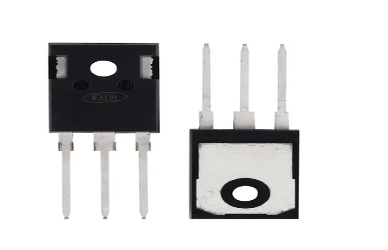
Renewable energy systems, including solar, wind, and hybrid power generation, are becoming increasingly vital for sustainable electricity production. Efficient power conversion and reliable switching are essential in these systems to maximize energy output and maintain stable operation. Insulated Gate Bipolar Transistors (IGBTs) play a crucial role in this context, serving as high-performance switches that enable efficient energy conversion, reduce losses, and enhance the overall reliability of renewable energy installations. By integrating IGBTs, solar inverters, wind turbine controllers, and hybrid energy systems can achieve higher efficiency, longer lifespan, and better adaptability to fluctuating power demands.
Role of IGBTs in Solar Power Systems
1.Function in Solar Inverters
IGBTs play a central role in the operation of solar inverters, which are the heart of any solar power system. Their primary function is to convert the direct current (DC) produced by solar panels into alternating current (AC), which can then be used for household appliances, industrial equipment, or fed directly into the power grid. Since modern infrastructure—homes, offices, factories, and public utilities—relies almost entirely on AC, this conversion is absolutely essential. Without the high-performance switching capabilities of IGBTs, solar-generated power would remain incompatible with mainstream energy systems, limiting its practical applications.
2.Importance of Fast Switching and High Voltage Handling
One of the most critical advantages of IGBTs is their ability to switch at very high speeds while managing elevated voltage levels. In solar inverters, fast switching translates directly to higher energy conversion efficiency, as it reduces the amount of energy lost as heat during transitions between on and off states. Additionally, the high-voltage handling capacity of IGBTs ensures that solar inverters can safely and reliably cope with the natural fluctuations in solar panel output, which vary throughout the day with changes in sunlight intensity. By combining speed with robustness, IGBTs make it possible to maintain a smooth and efficient energy supply even under challenging operating conditions.
3.Benefits to System Performance and Reliability
The integration of IGBTs into solar power systems delivers a wide range of benefits:
Reduced Energy Loss: By minimizing conduction and switching losses, IGBTs help increase the overall power conversion efficiency, meaning more of the harvested solar energy can be used productively.
Improved Reliability: Their durability and ability to function consistently under high load conditions enable solar inverters to operate stably, even during peak power demand or sudden changes in generation.
Extended System Lifespan: Because IGBTs reduce both thermal stress and energy waste, they not only protect themselves but also contribute to the long-term durability of associated components, such as capacitors, transformers, and control systems. This leads to lower maintenance costs and fewer system failures over time.
IGBTs in Wind Turbines
1.Role in Variable-Speed Inverters
IGBTs are widely used in the inverters of variable-speed wind turbines, which adjust rotor speed according to wind conditions. They efficiently convert the variable DC or AC generated by the turbine into stable AC compatible with the power grid. Their high-speed switching and voltage handling capabilities are crucial for precise control of energy conversion.
2.Managing Fluctuating Voltages and Currents
Wind energy is inherently variable, causing fluctuations in voltage and current. IGBTs help regulate these variations by enabling smooth switching and controlling power flow, ensuring that the generated electricity remains stable and consistent.
3.Contribution to Grid Stability and Optimized Output
By providing efficient power conversion and precise control, IGBTs contribute to a stable connection to the grid and help maximize energy output from wind turbines. Their reliability reduces system downtime and enhances the overall efficiency of wind energy systems, supporting sustainable and predictable renewable power generation.
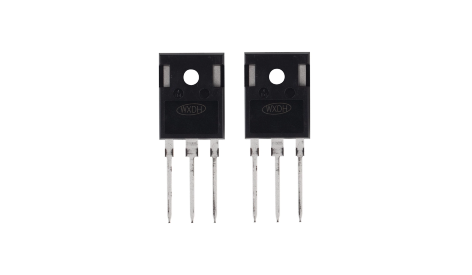
IGBTs in Wind Turbines
1.Role in Variable-Speed Inverters
IGBTs are widely used in the inverters of variable-speed wind turbines, which adjust rotor speed according to wind conditions. They efficiently convert the variable DC or AC generated by the turbine into stable AC compatible with the power grid. Their high-speed switching and voltage handling capabilities are crucial for precise control of energy conversion.
2.Managing Fluctuating Voltages and Currents
Wind energy is inherently variable, causing fluctuations in voltage and current. IGBTs help regulate these variations by enabling smooth switching and controlling power flow, ensuring that the generated electricity remains stable and consistent.
3.Contribution to Grid Stability and Optimized Output
By providing efficient power conversion and precise control, IGBTs contribute to a stable connection to the grid and help maximize energy output from wind turbines. Their reliability reduces system downtime and enhances the overall efficiency of wind energy systems, supporting sustainable and predictable renewable power generation.
Applications of IGBTs in Hybrid and Energy Storage Systems
1.IGBTs in Battery Storage Inverters and Converters
In hybrid renewable energy systems, IGBTs play a central role in battery storage technologies by driving inverters and DC-DC converters. These devices manage the bidirectional flow of electricity, enabling energy to be stored in batteries and later released when demand is high or renewable generation is low.
2.Enabling Efficient Charge/Discharge Cycles
IGBTs ensure precise control during charge and discharge processes, minimizing energy losses and extending battery lifespan. Their fast switching capabilities help maintain stable voltage and current levels, which is essential for protecting storage systems and delivering consistent performance.
3.Role in Smart Grid Integration and Energy Management
By supporting real-time power conversion and energy flow control, IGBTs facilitate seamless integration of storage systems into smart grids. This allows utilities and operators to balance supply and demand more effectively, improve grid stability, and optimize the use of renewable resources. In this way, IGBTs enhance both the flexibility and efficiency of hybrid energy solutions.
Trends and Innovations in IGBT Technology
1.Emerging SiC and GaN IGBTs for Higher Efficiency and Thermal Performance
Recent advances in semiconductor technology have led to the development of IGBTs based on wide bandgap materials such as Silicon Carbide (SiC) and Gallium Nitride (GaN). These new-generation IGBTs offer lower switching losses, higher thermal conductivity, and the ability to handle higher voltages and frequencies. As a result, they significantly improve the efficiency and power density of renewable energy systems.
2.Future Integration with Smart Grid and Energy Management Solutions
IGBTs are increasingly being designed to integrate seamlessly with advanced smart grid infrastructures. By enabling precise control of energy flow and real-time responsiveness, they support intelligent energy management systems that balance supply, demand, and storage. This integration ensures more reliable and adaptive renewable energy networks.
3.Impact on Sustainable and Cost-Effective Energy Systems
The evolution of IGBT technology directly contributes to the global shift toward sustainable energy. With higher efficiency, lower maintenance costs, and improved durability, IGBTs make renewable energy systems more affordable and scalable. Their innovations help accelerate the adoption of solar, wind, and hybrid power, paving the way for cleaner and more sustainable electricity generation.
Conclusion
IGBTs play an indispensable role in the advancement of renewable energy systems by enhancing efficiency, reliability, and overall performance. Whether in solar inverters, wind turbines, or energy storage systems, they ensure smooth power conversion, reduced energy loss, and stable grid integration.
Their importance extends beyond today’s applications—IGBTs are a key enabler for the future of sustainable energy, particularly as innovations in SiC and GaN technologies push the boundaries of efficiency and thermal performance. By supporting smart grids and next-generation energy infrastructures, IGBTs contribute directly to the global transition toward clean and renewable power.
For engineers and system designers, prioritizing high-quality, certified IGBTs is crucial to achieving optimal results in renewable energy projects. Doing so not only maximizes system safety and reliability but also accelerates the adoption of sustainable, cost-effective, and future-ready energy solutions.