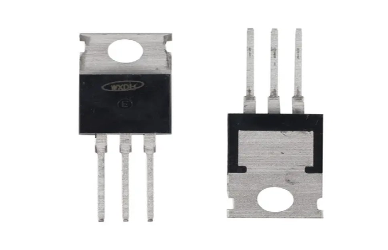
In many electronic circuits, particularly those involving analog components, negative voltage regulation is essential to ensure proper functionality. Certain devices, such as operational amplifiers, analog circuits, and power supplies, require both positive and negative voltages to operate effectively. For instance, operational amplifiers often rely on dual-supply configurations, where the positive and negative voltages are needed for accurate signal amplification and processing. Negative voltage regulators are responsible for converting a positive input voltage into a stable, reliable negative output voltage, ensuring that these components receive the correct power. Without a stable negative voltage, the performance of sensitive analog circuits could degrade, leading to errors, instability, or even failure in the system. Therefore, negative voltage regulators are crucial in maintaining the performance and reliability of a wide range of electronic applications.
3-terminal voltage regulators are essential components in electronics, designed to provide stable output voltages from an input power source. They have three key terminals: input (Vin), output (Vout), and ground (GND). The input terminal connects to a higher voltage source, while the output terminal provides the regulated voltage to the load, and the ground terminal completes the circuit.
1.Positive vs Negative Voltage Regulators:
3-terminal regulators come in positive and negative types. Positive regulators output a stable positive voltage (e.g., 5V or 12V), while negative regulators provide a stable negative voltage (e.g., -5V or -12V) from a positive input. The primary difference is the polarity of the output voltage.
2.Applications of Negative Voltage Regulators:
Negative voltage regulators are commonly used in applications requiring dual power supplies. In analog systems, both positive and negative voltages are needed for components like operational amplifiers. In audio circuits, they power audio amplifiers, and in dual-supply systems, they provide the necessary negative voltage for various devices like sensors and instrumentation.
What is a 3-Terminal Negative Voltage Regulator IC?
A 3-terminal negative voltage regulator IC is an integrated circuit designed to provide a stable and regulated negative output voltage from a positive input voltage. It has three key terminals: the input (Vin), the output (Vout), and the ground (GND). The input terminal connects to a positive voltage source, the ground terminal connects to the circuit's common ground, and the output terminal provides the negative voltage needed to power components.
1.Working Principle
The regulator works by using internal circuitry to convert the positive input voltage into a stable negative output voltage. It typically uses an error amplifier to compare the output voltage with a reference voltage. If the output voltage deviates from the desired value, the regulator adjusts the output to maintain a constant negative voltage. This process ensures that components requiring negative voltages, like operational amplifiers or analog circuits, receive a steady power supply.
2.Key Differences Between Negative and Positive Voltage Regulators
The main difference between negative and positive voltage regulators lies in the direction of the output voltage. Positive voltage regulators provide a stable positive output voltage (e.g., +5V or +12V), while negative voltage regulators output a stable negative voltage (e.g., -5V or -12V). While both types use similar internal regulation mechanisms, negative regulators are specifically designed to handle input voltages and provide a negative voltage output, crucial for applications that require dual-supply or split power configurations.
Common Types of 3-Terminal Negative Voltage Regulators
There are several common types of 3-terminal negative voltage regulators, each designed to provide stable negative output voltages for various applications. Below are some of the most widely used models:
1. 7800 Series (Negative Regulators)
The 7800 series is a well-known family of negative voltage regulators. These regulators are designed to provide fixed negative voltages from a positive input. Common models include:
7905: Provides a stable -5V output.
7912: Provides a stable -12V output.
7915: Provides a stable -15V output.
These regulators are easy to use and commonly found in applications that require a fixed negative voltage, such as in analog circuits and audio systems.
2. LM337 (Adjustable Negative Voltage Regulator)
The LM337 is a widely used adjustable negative voltage regulator. Unlike fixed voltage regulators, the LM337 allows users to adjust the output voltage using external resistors. This flexibility makes it suitable for applications where a specific negative voltage is needed, such as powering analog components or instrumentation circuits. It can provide output voltages ranging from -1.25V to -37V, depending on the resistor configuration. The LM337 also features internal current limiting and thermal shutdown for added protection.
3. LM79 Series (Negative Voltage Regulators)
The LM79 series is another family of negative voltage regulators, similar to the 7800 series. The LM7900 series includes models like LM7905, LM7912, and LM7915, which provide negative voltage outputs of -5V, -12V, and -15V, respectively. These regulators are designed for use in situations where a fixed negative voltage is required, such as in dual-supply systems or other analog applications. They are reliable, simple to use, and commonly found in consumer electronics and industrial equipment.
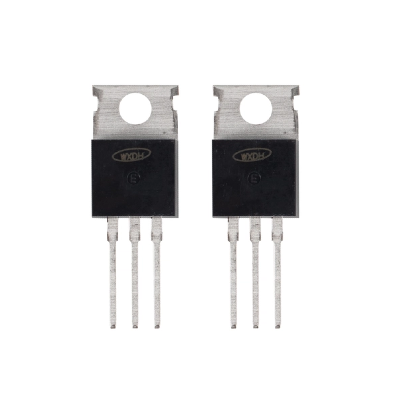
Applications of 3-Terminal Negative Voltage Regulators
3-terminal negative voltage regulators are essential in various electronic systems, where a stable negative voltage is required for proper operation. Below are key applications of these regulators:
1. Dual-Supply Power Systems
In many electronic systems, especially in dual-supply power systems, both positive and negative voltages are required to power different parts of the system. 3-terminal negative voltage regulators are used to provide the negative voltage from a single positive voltage source. This is common in systems like operational amplifiers, analog circuits, and signal processing systems, where both negative and positive rails are needed for proper functionality and signal integrity.
2. Audio Amplifiers
Negative voltage is crucial in audio circuits, especially in audio amplifiers, where both positive and negative supply voltages are required to handle AC signals without distortion. 3-terminal negative voltage regulators ensure that audio amplifiers receive a stable negative voltage, allowing for accurate sound amplification and minimizing noise or distortion in audio signals. These regulators are particularly important in high-fidelity audio equipment.
3. Operational Amplifiers
Many operational amplifiers (op-amps) rely on both positive and negative voltage supplies to accurately process analog signals. 3-terminal negative voltage regulators are used to provide the negative voltage necessary for op-amp circuits, ensuring that the op-amps can function properly, especially in precision applications like signal conditioning, filtering, and amplification. Without a stable negative voltage, op-amp performance can degrade, leading to incorrect signal processing.
4. Analog Circuits
In analog systems, 3-terminal negative voltage regulators are often employed to provide a stable negative voltage reference. These analog circuits, which include sensors, signal processors, and measurement equipment, require precise negative voltages to operate effectively. The stable negative voltage ensures accurate readings and signal integrity, making these regulators essential for reliable performance in analog applications.
Selecting a 3-Terminal Negative Voltage Regulator
When selecting a 3-terminal negative voltage regulator, consider these key factors to ensure it suits your application:
1. Voltage and Current Requirements
Output Voltage: Choose a regulator that provides the required negative voltage (e.g., -5V, -12V, -15V) for your circuit.
Current Capacity: Ensure the regulator can supply the necessary current. Check the datasheet for the maximum output current rating and select a regulator with a sufficient margin for stability.
2. Dropout Voltage
Importance: The regulator needs the input voltage to be higher than the output by at least the dropout voltage for stable operation.
Consideration: If the input voltage is close to the output voltage, use a Low Dropout (LDO) regulator, which operates effectively with a smaller voltage difference between input and output.
3. Thermal Management
Heat Dissipation: Linear regulators convert excess voltage into heat. The greater the voltage difference, the more heat generated.
Efficiency: Minimize heat by selecting a regulator with an appropriate dropout voltage and ensuring the input voltage is not too high.
Thermal Considerations: Check the thermal shutdown specifications, and consider adding a heatsink or ensuring good ventilation to manage heat.
FAQ Section
FAQ 1: Why do we need a negative voltage regulator in electronic circuits?
Answer: Negative voltage regulators are crucial for circuits requiring dual power supplies, such as op-amps, audio systems, and analog devices. They provide the necessary negative voltage, ensuring accurate signal processing and operation.
FAQ 2: Can a positive voltage regulator be used as a negative voltage regulator?
Answer: No, positive and negative voltage regulators are designed differently. Positive regulators output positive voltages, while negative regulators convert a positive input into a negative output.
FAQ 3: What is the main limitation of a 3-terminal negative voltage regulator?
Answer: The main limitation is the dropout voltage. The input voltage must be sufficiently higher than the output voltage, and if the difference is too small, regulation may not be stable.
FAQ 4: How do I know which negative voltage regulator to choose for my circuit?
Answer: Choose a regulator based on required output voltage, current, and efficiency. For adjustable outputs, consider the LM337. For fixed outputs, models like 7905 or 7912 work well. Always check the datasheet for voltage range, current capacity, and thermal performance.
Conclusion
3-terminal negative voltage regulators play a crucial role in modern electronics by providing stable and reliable negative voltages needed for a wide range of applications, including dual-supply power systems, audio amplifiers, operational amplifiers, and analog circuits. These regulators ensure the proper operation of sensitive components, maintaining signal integrity and performance. When selecting the right 3-terminal negative voltage regulator, it's important to consider factors such as the required output voltage, current capacity, and thermal management, as well as the specific needs of your system. By carefully choosing the appropriate IC based on these factors, you can ensure efficient, reliable, and optimal performance in your electronic designs.