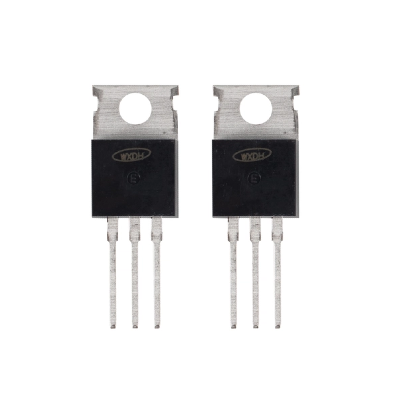
Voltage regulators are essential components in modern circuit design, ensuring that electronic devices receive a stable and reliable voltage supply, regardless of fluctuations in input power or changes in load conditions. They are critical for maintaining the performance, reliability, and longevity of electronic systems. Among the various types of voltage regulators, the 3-terminal voltage regulator IC is one of the most commonly used solutions. These regulators typically feature three terminals: an input, an output, and a ground, making them compact and easy to integrate into various applications. The 3-terminal regulator IC is widely employed to provide stable voltage outputs in a range of devices, from consumer electronics like smartphones and laptops, to embedded systems powering microcontrollers, sensors, and communication modules. Additionally, they are crucial in automotive electronics, where they ensure that critical systems, such as infotainment, navigation, and sensor systems, operate reliably despite fluctuations in the vehicle's power supply.
Overview of the 3-Terminal Voltage Regulator
A 3-terminal voltage regulator IC is a vital component in electronics, providing a stable output voltage regardless of fluctuations in input voltage or load conditions. These regulators have three terminals: input (Vin), output (Vout), and ground (GND), making them easy to integrate into various applications.
1.What is a 3-Terminal Voltage Regulator?
A 3-terminal voltage regulator IC regulates the voltage supplied to a load by ensuring a constant, stable output voltage. The input terminal connects to a higher voltage source, the output terminal provides the regulated voltage, and the ground terminal connects to the common ground of the circuit. This simple design makes it versatile for many applications.
2.Common Types of 3-Terminal Regulators
Linear Regulators:
Linear regulators stabilize the output voltage by dissipating excess power as heat. They maintain a steady voltage by adjusting a pass transistor, even with varying loads or input voltages.
Low Dropout (LDO) Regulators:
LDO regulators are a type of linear regulator designed to operate with a smaller input-output voltage difference, known as the dropout voltage. This makes them more efficient, especially when the input voltage is close to the desired output voltage, reducing heat generation and power loss.
3.Basic Working Principle of a 3-Terminal Regulator
A 3-terminal regulator uses a feedback mechanism to maintain a stable output voltage. It continuously monitors the output and compares it to a reference voltage. If the output voltage deviates, the regulator adjusts the internal circuitry (like a pass transistor) to bring the voltage back to the desired level, ensuring consistent and reliable output despite input or load changes.
How Does a 3-Terminal Regulator Work?
1.Input Voltage and Output Voltage
A 3-terminal voltage regulator converts the input voltage into a stable output voltage. The input voltage must always be higher than the output voltage, with a difference called the voltage drop. Traditional linear regulators require a larger voltage difference, while Low Dropout (LDO) regulators work with smaller voltage drops, making them more efficient when the input voltage is close to the output.
2.Feedback Control Mechanism
The regulator uses an internal feedback loop to monitor and adjust the output voltage. It compares the output with a reference voltage, and if there’s any deviation, the feedback mechanism adjusts the internal components to bring the output back to the desired level.
There are two feedback types:
Voltage-based Feedback: Compares the output voltage with the reference voltage to ensure stability.
Current-based Feedback: Monitors output current to maintain balance in power delivery and voltage regulation, typically used in higher-power designs.
3.Regulation Components
Key components ensure stable output:
Reference Voltage Source: Provides a stable voltage for comparison to the output.
Error Amplifier: Compares the output voltage to the reference and amplifies the error.
Power Transistor: Adjusts the voltage by controlling current flow based on feedback from the error amplifier.
Key Characteristics of 3-Terminal Voltage Regulators
1.Output Stability
A key feature of 3-terminal voltage regulators is their ability to maintain a constant output voltage, even when the load conditions change. As the load current fluctuates, the regulator adjusts the internal components to compensate for variations, ensuring a stable output. This stability is achieved through the feedback control mechanism, which continuously monitors and corrects the output voltage to meet the desired level, regardless of input fluctuations or load demands.
2.Efficiency
Efficiency is a critical consideration for 3-terminal regulators, particularly linear regulators. Linear regulators dissipate excess power as heat, resulting in efficiency losses, especially when there is a large difference between the input and output voltages. The greater the voltage difference, the more heat is generated, reducing overall efficiency.
In comparison, Low Dropout (LDO) regulators are more efficient than traditional linear regulators, as they can operate with smaller input-output voltage differences, minimizing power loss. However, LDOs still suffer from inefficiencies due to heat dissipation, though to a lesser extent.
Switching regulators, such as buck or boost converters, offer significantly higher efficiency because they do not rely on dissipating excess energy as heat. Instead, they use a switching mechanism to convert the input voltage to the desired output voltage, achieving efficiencies typically greater than 80-90%, especially in high-power applications.
3.Current Capacity and Power Consumption
When selecting a 3-terminal regulator, it’s essential to consider the current requirements and power consumption of the application. Regulators are rated for specific maximum output currents, and exceeding this rating can result in overheating or failure.
For applications with higher current demands, ensure that the regulator can handle the required current without significant voltage drops or excessive heat. For low-power or battery-operated devices, LDOs might be preferred for their low quiescent current consumption, which helps extend battery life. Always check the regulator’s datasheet for the maximum output current and power dissipation specifications to ensure the regulator meets the power needs of your design.
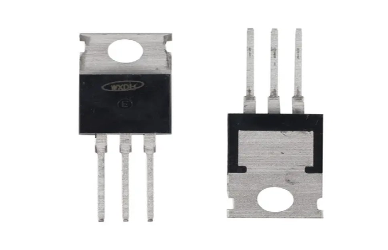
Common Applications of 3-Terminal Voltage Regulators
1.Consumer Electronics
3-terminal voltage regulators are widely used in consumer electronics to ensure stable power delivery to sensitive components. In devices like mobile phones, laptops, and battery chargers, these regulators maintain the required voltage levels despite varying input voltages or load changes. They provide reliable power management, which is crucial for device performance, longevity, and safety.
2.Embedded Systems and Circuits
In embedded systems and circuits, 3-terminal regulators play a vital role in ensuring that microcontrollers, power management units, and other components receive a stable voltage. These systems are often designed to operate in environments with fluctuating power supplies, and voltage regulators ensure consistent and reliable operation. Whether used in sensors, communication modules, or signal processing, the stable voltage is critical for maintaining the functionality of embedded electronics.
3.Automotive Electronics
In automotive electronics, 3-terminal regulators are essential for managing the power needs of various vehicle systems. These regulators are used in sensors, electronic control units (ECUs), and power management systems to provide stable power despite the variations in the vehicle’s electrical system. They help maintain consistent performance in critical systems like navigation, infotainment, and engine control, even with the harsh operating conditions typically found in automotive environments.
4.Industrial Equipment
In industrial equipment, 3-terminal voltage regulators ensure stable power to automation devices, testing instruments, and power supplies. These regulators are integral to industrial control systems, where stable voltage is necessary for precision operations. They are used in a range of applications, from factory automation to testing and measurement equipment, ensuring that equipment runs smoothly and reliably, even under varying load conditions or power supply instability.
FAQ Section
FAQ 1: What is the difference between a 3-terminal regulator and a switching regulator?
Answer: A 3-terminal regulator, especially linear regulators (LDO), adjusts the output by dissipating excess voltage as heat, making it less efficient but suitable for low-power applications. A switching regulator (e.g., buck or boost DC-DC converter) uses switch-mode components like inductors and capacitors to adjust voltage, offering higher efficiency, making it ideal for high-power applications. 3-terminal regulators are preferred for low noise, compact designs, while switching regulators are more efficient for high-power needs.
FAQ 2: How can the efficiency of a 3-terminal regulator be improved?
Answer: The efficiency of 3-terminal regulators is typically low due to heat dissipation. To improve efficiency:
Use LDO regulators for a smaller input-output voltage difference, reducing energy loss.
Consider a switching regulator (like a DC-DC converter) if higher efficiency is required.
FAQ 3: Can the output voltage of a 3-terminal regulator be adjusted?
Answer: Some 3-terminal regulators (like adjustable LDOs) allow the output voltage to be set using external resistors. Many others have fixed output voltages (e.g., 5V, 3.3V), which simplifies design but limits flexibility.
FAQ 4: What are the input voltage limitations of a 3-terminal regulator?
Answer: The input voltage must be higher than the output voltage and within the regulator’s rated range. A voltage too high can damage the regulator, while a voltage too low may not maintain stable output. Always check the datasheet for the correct input voltage range.
Conclusion
3-terminal voltage regulators play a vital role in providing stable and reliable power in a wide range of electronic applications. Whether in consumer electronics, embedded systems, automotive electronics, or industrial equipment, these regulators ensure that sensitive components receive a consistent voltage, even when input power fluctuates or load conditions change. While linear regulators offer simplicity and low noise, they come with efficiency challenges, especially in high-power applications. On the other hand, Low Dropout (LDO) regulators provide improved efficiency with lower voltage differences. Understanding the key characteristics, working principles, and applications of 3-terminal voltage regulators helps in selecting the right regulator for specific needs, whether prioritizing stability, efficiency, or flexibility in voltage adjustment.