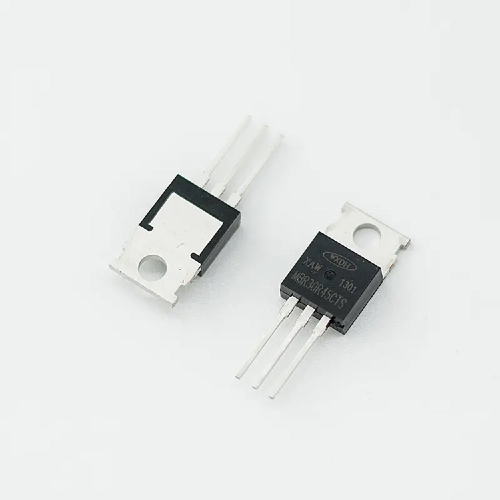
Why Understanding MOSFET Applications Matters
What is a MOSFET used for?
In today’s world of smart electronics, renewable energy, and digital automation, this question has become increasingly important. The MOSFET (Metal–Oxide–Semiconductor Field-Effect Transistor) is one of the most fundamental and versatile components in electrical engineering.
Whether you are charging your phone, controlling an electric motor, or converting solar energy into usable power, there is almost always a MOSFET working silently behind the scenes. It acts as a high-speed electronic switch or an amplifier, shaping how energy flows within circuits.
Understanding how a MOSFET works—and what it is used for—reveals why it dominates nearly every segment of modern technology, from consumer electronics to electric vehicles and 5G communication systems.
What Is a MOSFET and How Does It Work?
A MOSFET, short for Metal-Oxide-Semiconductor Field-Effect Transistor, is a type of field-effect transistor (FET) that controls the flow of electrical current using voltage rather than current. This makes it extremely energy-efficient and suitable for both analog and digital applications.
Basic Structure
A typical MOSFET consists of four key regions:
Source (S): Where the carriers (electrons or holes) enter.
Drain (D): Where carriers exit the device.
Gate (G): Controls the flow of carriers via an insulating oxide layer.
Substrate (Body): Acts as the foundation of the device.
When voltage is applied to the gate, it forms an electric field that allows current to pass between the source and drain. When the gate voltage is removed, the channel closes, stopping current flow. This simple mechanism allows the MOSFET to function as an ultra-fast switch.
Types of MOSFETs
Type | Sub-category | Main Feature | Common Applications |
N-Channel MOSFET | Enhancement Mode | Conducts when gate is positive | Power supplies, motor drivers |
P-Channel MOSFET | Enhancement Mode | Conducts when gate is negative | Low-side switching |
N-Channel MOSFET | Depletion Mode | Normally ON, turns OFF with gate voltage | Amplifier bias circuits |
P-Channel MOSFET | Depletion Mode | Normally ON, turns OFF with positive voltage | Signal processing circuits |
N-channel MOSFETs are preferred in most power and high-speed switching applications due to their lower on-resistance (Rds(on)) and faster performance.
Why MOSFETs Are So Widely Used
The widespread use of MOSFETs is driven by a unique combination of performance, efficiency, and scalability. Let’s explore why engineers choose MOSFETs over other transistor types.
1. High Efficiency and Low Power Loss
MOSFETs consume minimal gate current because they are voltage-driven devices. This makes them perfect for energy-sensitive applications such as portable devices and renewable energy systems.
2. High Switching Speed
They can switch from ON to OFF within nanoseconds, enabling high-frequency converters and fast digital logic circuits.
3. Compact and Scalable Design
MOSFETs can be integrated into IC chips or used as discrete components in power electronics, allowing flexibility across product sizes.
4. High Input Impedance
This feature ensures that MOSFETs draw negligible input current, making them excellent for signal amplification in communication systems.
5. Thermal Stability
Modern power MOSFETs include optimized silicon structures that provide high heat dissipation and reliability under heavy load conditions.
Main Applications: What Is a MOSFET Used For?
Now that we understand how MOSFETs work, let’s look at where they are used in real-world scenarios.
From smartphones to electric vehicles, MOSFETs are essential for managing voltage, current, and power efficiency.
1. Power Switching and Conversion
MOSFETs are key components in power supply units (PSUs), DC-DC converters, and switch-mode power supplies (SMPS).
They act as high-speed switches that control the conversion of AC to DC and regulate output voltage.
Their high switching frequency allows for smaller inductors and capacitors, reducing overall circuit size.
Applications include laptop adapters, LED drivers, server power modules, and battery chargers.
2. Motor Control and Industrial Automation
In the industrial world, MOSFET motor drivers ensure precise control of motors used in robotics, conveyor belts, CNC machines, and home appliances.
They allow variable speed control by adjusting the pulse width of the voltage applied to the motor.
Provide smooth starting, acceleration, and braking through PWM (Pulse Width Modulation) control.
Their fast switching reduces energy waste and enhances performance consistency.
3. Automotive Electronics
The automotive industry is one of the biggest users of MOSFETs.
Electric vehicles (EVs) and hybrid cars rely on MOSFETs for managing high-voltage battery packs and inverters.
On-board chargers, DC-DC converters, and motor controllers use MOSFETs for efficiency and thermal control.
Advanced Driver-Assistance Systems (ADAS) also use MOSFETs in camera and radar modules.
Benefits:
High power density
Low switching losses
Fast response for real-time vehicle control
4. Consumer Electronics
From smartphones to smart TVs, MOSFETs play a silent but vital role.
Used in power regulation circuits to stabilize voltage.
Control screen backlighting in LED displays.
Manage energy efficiency in chargers and power adapters.
Support audio amplifiers and RF circuits for signal clarity.
Common devices using MOSFETs: laptops, tablets, gaming consoles, wearables, and home appliances.
5. Renewable Energy and Inverter Systems
In solar energy systems and wind turbines, MOSFETs help convert DC power into AC power efficiently.
Serve as key switches in solar inverters, battery storage systems, and microgrids.
Provide high efficiency and low heat generation, crucial for renewable power systems.
Enable real-time energy flow control to maximize generation and minimize losses.
6. Communication and 5G Infrastructure
As 5G networks expand, MOSFETs play a major role in RF (radio frequency) and microwave systems.
Used in low-noise amplifiers (LNAs) for signal integrity.
Enhance transmission efficiency in base stations and antennas.
Enable high-speed, low-distortion signal amplification for reliable data transfer.
Typical uses: 5G repeaters, base station modules, satellite communication devices.
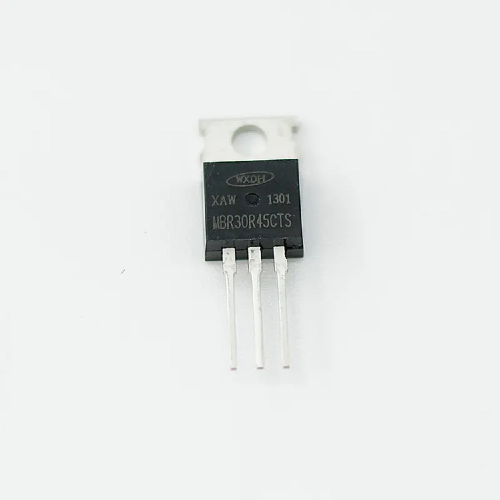
Emerging Trends: The Future Uses of MOSFETs
Technology is advancing fast, and the role of the MOSFET continues to evolve. Traditional silicon-based MOSFETs are being complemented—and sometimes replaced—by wide bandgap (WBG) materials like SiC (Silicon Carbide) and GaN (Gallium Nitride).
1. SiC MOSFETs (Silicon Carbide)
Offer higher breakdown voltage and temperature tolerance.
Ideal for electric vehicles, industrial inverters, and renewable energy systems.
Reduce energy loss and improve switching performance at high frequencies.
2. GaN MOSFETs (Gallium Nitride)
Feature ultra-fast switching speeds and lower gate charge.
Common in high-frequency converters, wireless charging, and RF communication.
Enable smaller, lighter, and more energy-efficient electronic devices.
3. Integration with Smart Power Modules
Modern devices integrate multiple MOSFETs with controllers, sensors, and drivers into one Smart Power Module (SPM).
These systems improve thermal management and reliability while simplifying circuit design.
Why Choose Advanced MOSFETs from Reliable Manufacturers
When selecting MOSFETs, engineers prioritize not only performance but also reliability, package variety, and quality control.
A professional manufacturer provides:
Comprehensive product range: From low-voltage logic MOSFETs to high-voltage SiC MOSFETs.
Diverse packages: TO-220, TO-247, TO-252, QFN, DFN, etc.
Automated production and testing: Ensuring consistency and high yield.
Custom design services: Tailored MOSFET solutions for automotive, energy, or industrial applications.
Technical Comparison: MOSFET vs. IGBT vs. BJT
Parameter | MOSFET | IGBT | BJT |
Control Type | Voltage-controlled | Voltage & current-controlled | Current-controlled |
Switching Speed | Very High | Moderate | Low |
Conduction Loss | Low | Medium | High |
Voltage Range | Low–Medium | Medium–High | Low |
Applications | SMPS, DC-DC converters, EV electronics | High-voltage drives, inverters | Signal amplification |
Efficiency | Excellent | Good | Moderate |
Cost | Low to Moderate | Higher | Low |
This comparison demonstrates why MOSFETs dominate in applications requiring speed, efficiency, and low power consumption.
Conclusion
The MOSFET is far more than a simple transistor—it is the invisible engine that powers the advancement of modern electronics. From power converters and electric vehicles to renewable energy systems and communication technologies, MOSFETs play a pivotal role in improving energy efficiency, performance, and reliability.
As industries worldwide accelerate their transition toward smart and sustainable innovation, the demand for high-performance MOSFETs continues to expand. Companies striving for superior power control, reduced energy loss, and enhanced system stability rely on advanced semiconductor technologies to stay ahead.
With a strong focus on quality, innovation, and long-term reliability, Jiangsu Donghai Semiconductor Co., Ltd. is dedicated to providing efficient, dependable MOSFET solutions that empower progress across multiple sectors.
To discover more about their cutting-edge semiconductor technologies or to discuss how their MOSFET products can support your projects, we invite you to reach out to Jiangsu Donghai Semiconductor Co., Ltd. today.
FAQs
Q1: What is the main purpose of a MOSFET?
A: A MOSFET controls or amplifies electrical signals by acting as a voltage-controlled switch, enabling efficient current regulation in electronic circuits.
Q2: What are the main types of MOSFETs?
A: N-channel and P-channel MOSFETs, each available in enhancement or depletion modes depending on their operating characteristics.
Q3: Why are MOSFETs used instead of BJTs?
A: MOSFETs consume less power, switch faster, and generate less heat, making them ideal for modern power electronics and integrated systems.
Q4: Can MOSFETs handle high voltages?
A: Yes. Specialized SiC and GaN MOSFETs can handle hundreds or even thousands of volts efficiently with minimal power loss.
Q5: Where are MOSFETs most commonly found?
A: In power supplies, solar inverters, automotive electronics, consumer devices, and communication systems—essentially anywhere energy conversion or control is needed.
Q6: What is the future of MOSFET technology?
A: The future lies in wide bandgap materials like SiC and GaN, offering higher efficiency, faster switching, and smaller form factors for next-generation electronic devices.