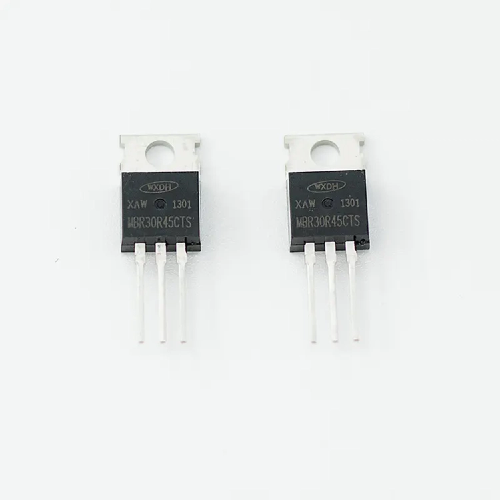
Understanding MOSFET and Its Versatility
The MOSFET (Metal-Oxide-Semiconductor Field-Effect Transistor) is one of the most fundamental components in modern electronics. It serves as the backbone of circuits used in everything from smartphones and laptops to industrial automation systems and electric vehicles.
What makes the MOSFET truly remarkable is its ability to control large amounts of current with minimal power input. Acting as a voltage-controlled switch or amplifier, the MOSFET converts small input voltage variations at the gate terminal into significant current flow between the drain and source terminals.
Due to its high efficiency, scalability, fast switching speed, and low power consumption, the MOSFET has become indispensable across industries. This article explores the wide range of applications of MOSFETs, the reasons behind their dominance in electronic design, and their future role in next-generation technologies.
Classification of MOSFETs and Their Functional Roles
Before diving into its applications, understanding the types of MOSFETs is crucial. The functionality of a MOSFET depends largely on its type and configuration.
Main Types of MOSFETs
N-channel MOSFET – Uses electrons as charge carriers. It offers low resistance and faster performance, ideal for switching and power control.
P-channel MOSFET – Uses holes as charge carriers. Common in high-side switching and complementary circuits.
Enhancement-mode MOSFET – Normally OFF; requires gate voltage to conduct.
Depletion-mode MOSFET – Normally ON; applying voltage reduces conductivity.
Each MOSFET type fits specific operational and design requirements.
MOSFET Type | Polarity | Default State | Common Applications |
N-channel Enhancement | Electron | OFF | Power converters, DC-DC regulators |
P-channel Enhancement | Hole | OFF | High-side switches |
N-channel Depletion | Electron | ON | Analog amplifiers, voltage limiters |
P-channel Depletion | Hole | ON | Low-power signal circuits |
The versatility of MOSFETs across modes and polarities enables their use in both analog and digital applications, from signal processing to heavy-duty power control.
MOSFET Applications in Power Electronics
1. Power Switching and Control
MOSFETs are the cornerstone of power electronics. They control high current and voltage in circuits while maintaining efficiency. Due to their fast switching capabilities, MOSFETs are used in:
DC–DC converters
Switch-mode power supplies (SMPS)
Inverters
Motor controllers
In these systems, MOSFETs convert DC energy into usable forms with minimal losses, enabling efficient power delivery in electronic devices.
2. Energy Conversion Systems
Modern renewable energy systems depend heavily on MOSFET technology. In solar inverters, battery management systems (BMS), and electric vehicle (EV) chargers, MOSFETs provide high switching frequency and low on-resistance, ensuring efficient power conversion.
They are also key to achieving energy optimization, reducing heat dissipation, and maintaining long-term system reliability.
3. Automotive Electronics
In the automotive sector, MOSFETs power an array of control systems:
Electronic control units (ECUs)
Fuel injection systems
Electric vehicle drive systems
LED headlights and display panels
Their compact design, efficiency, and ability to operate under high temperatures make MOSFETs essential for automotive safety, comfort, and sustainability.
MOSFETs in Digital and Logic Circuits
1. MOSFETs in Integrated Circuits (ICs)
The entire digital world runs on MOSFETs. They are the primary building blocks of CMOS (Complementary Metal-Oxide-Semiconductor) technology, which is used in:
Microprocessors
Memory chips (RAM, Flash)
Logic gates
Billions of MOSFETs are integrated into a single chip, performing logical operations and controlling signal flow. The low leakage current and scalability of MOSFETs enable high-density integration, forming the basis of modern computing and data processing.
2. Switching and Signal Processing
MOSFETs also play a vital role in digital switching and signal processing. They can act as electronic switches that rapidly turn ON and OFF, controlling digital logic states.
Their high input impedance ensures minimal loading on input circuits, while fast switching speed makes them ideal for pulse-width modulation (PWM) and timing control circuits.
MOSFETs in Amplifier and Audio Systems
1. MOSFET as an Amplifier
MOSFETs serve as efficient amplifiers in analog circuits. When configured properly, they can amplify weak signals without significant distortion.
Applications include:
Audio power amplifiers
Operational amplifiers
Signal conditioning circuits
MOSFET amplifiers provide smooth linear gain, low noise, and excellent thermal stability, making them superior to traditional BJTs in high-fidelity systems.
2. Audio and RF Applications
In radio frequency (RF) and audio applications, MOSFETs are favored for their ability to handle high frequencies with precision. They are used in:
Wireless transmitters
RF amplifiers
Audio output stages
The combination of high frequency response and thermal efficiency makes them essential for sound and signal quality.
MOSFETs in Communication and Signal Processing Systems
Communication systems require components that deliver high-frequency performance with low noise levels. MOSFETs meet these demands by functioning as mixers, modulators, and oscillators in:
Satellite communication
Mobile base stations
Wireless transmitters and receivers
MOSFETs enable stable amplification and rapid signal modulation, which are vital for 5G technology, Wi-Fi systems, and IoT communication modules.
MOSFETs in Industrial Automation and Control Systems
The industrial automation field increasingly depends on MOSFETs for precision and power efficiency. They are used in:
Motor drives and speed controllers
Programmable logic controllers (PLCs)
Robotic control systems
MOSFETs ensure accurate control of voltage and current levels, enabling stable operation of industrial equipment. Their fast response time also enhances safety and system coordination.
Integration with microcontrollers and sensor interfaces allows MOSFETs to contribute to smart manufacturing and automated monitoring systems.
MOSFETs in Consumer Electronics
MOSFETs are present in nearly every consumer electronic device we use daily:
Smartphones and tablets
Laptops and desktops
Televisions and monitors
Chargers and adapters
LED lighting
They regulate voltage, prevent overcurrent, and enhance energy efficiency. MOSFET-based circuits make these devices more compact, lightweight, and power-efficient, extending battery life and performance.
MOSFETs in Medical and Aerospace Applications
1. Medical Electronics
MOSFETs are key to precision and safety in medical devices. They are used in:
Imaging systems (CT, MRI)
Defibrillators
Portable diagnostic equipment
Implantable devices
Their low leakage currents and high reliability make them suitable for life-critical systems where performance stability is vital.
2. Aerospace and Defense Systems
MOSFETs are also integral in aerospace and defense electronics, including:
Avionics
Radar transmitters
Power converters for satellites
Specialized high-temperature and radiation-hardened MOSFETs ensure performance in extreme environmental conditions, maintaining the reliability demanded in aerospace operations.
Emerging Applications and Future Trends of MOSFET
1. Wide Bandgap MOSFETs (SiC and GaN)
The future of power electronics lies in wide-bandgap MOSFETs, particularly those made from Silicon Carbide (SiC) and Gallium Nitride (GaN).
Benefits include:
Higher voltage tolerance
Faster switching speeds
Lower conduction losses
These features make SiC and GaN MOSFETs ideal for electric vehicles, 5G infrastructure, and renewable energy systems.
2. MOSFETs in IoT and Smart Devices
The Internet of Things (IoT) relies on MOSFETs for power management, signal amplification, and data processing. Their small size and efficiency enable use in wearables, smart sensors, and home automation systems.
3. Quantum and Nano-scale MOSFETs
As device miniaturization continues, FinFETs and NanoFETs are emerging as the successors to traditional MOSFETs. These advanced structures enhance control over channel current and reduce leakage, making them ideal for AI chips, supercomputers, and quantum processors.
Advantages of Using MOSFETs Across Applications
Feature | Description | Application Benefit |
High Efficiency | Low switching and conduction losses | Power control and converters |
High Input Impedance | Requires minimal gate current | Signal amplification |
Compact Design | Suitable for integrated circuits | Portable electronics |
Fast Switching | Enables high-frequency operation | Communication and control |
Thermal Stability | Maintains reliability under load | Automotive and industrial |
Scalability | Supports nano-scale fabrication | Modern processors |
The versatility and technical superiority of MOSFETs make them the preferred choice for modern electronics.
Conclusion
From electric vehicles to high-speed communication systems, the MOSFET has become an essential component powering modern technology. Its exceptional energy efficiency, rapid switching speed, and versatility make it indispensable in today’s smart, connected world. As industries continue to evolve toward intelligent energy systems, IoT infrastructure, and AI-driven solutions, the demand for advanced MOSFET technology will keep rising.
For businesses seeking reliable, high-performance MOSFET components that deliver stability and precision across industrial, automotive, and energy sectors, Jiangsu Donghai Semiconductor Co., Ltd. stands as a trusted partner. The company is dedicated to continuous innovation, superior quality, and long-term customer collaboration. Connect with Jiangsu Donghai Semiconductor Co., Ltd. to explore how their cutting-edge MOSFET technology can empower your next-generation applications.
FAQs
Q1: What are the most common applications of MOSFETs?
A: MOSFETs are commonly used in switching power supplies, amplifiers, microprocessors, motor controllers, and automotive electronics.
Q2: Why is MOSFET preferred over BJT in modern electronics?
A: MOSFETs offer higher efficiency, faster switching, lower energy loss, and greater integration capability compared to BJTs.
Q3: How does MOSFET contribute to renewable energy systems?
A: It enhances inverter efficiency and power conversion in solar and wind energy setups.
Q4: What type of MOSFET is ideal for power switching?
A: N-channel enhancement-mode MOSFETs are the most common for high-speed, high-efficiency power control.
Q5: Are MOSFETs used in communication devices?
A: Yes, they are used in RF amplifiers, signal modulators, and mobile communication transmitters for low-noise operation.
Q6: What are the new trends in MOSFET technology?
A: Wide-bandgap SiC and GaN MOSFETs, and nano-scale FinFET structures, are shaping the future of high-performance electronics.