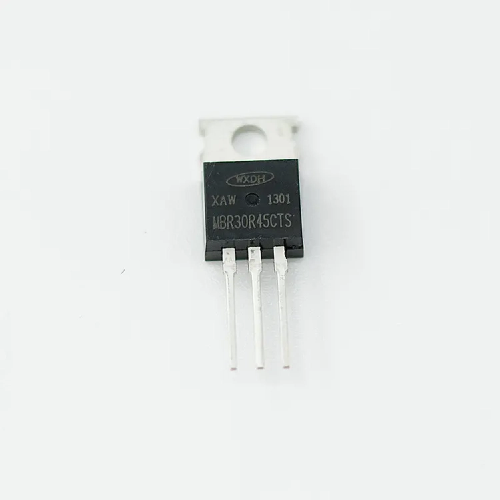
Understanding the Role of MOSFETs in Modern Electronics
In today’s rapidly evolving world of electronics, efficiency and precision are everything. From smartphones and power supplies to electric vehicles and solar inverters, nearly every modern device relies on one essential component: the MOSFET, or Metal–Oxide–Semiconductor Field-Effect Transistor.
A MOSFET is a fundamental building block in both analog and digital circuits, functioning as a voltage-controlled switch or amplifier. It can control large amounts of current with very little input power, making it a cornerstone of modern semiconductor technology.
But not all MOSFETs are the same. In fact, MOSFETs are classified into four main types, each designed for specific electrical behaviors and applications. Understanding the differences between these types helps engineers choose the right MOSFET for efficient, stable, and high-performance circuit design.
This article explores the four types of MOSFETs, explains their characteristics and functions, and offers guidance on selecting the best type for your application.
What Is a MOSFET and How Does It Work?
Before diving into the four types, it’s important to understand how a MOSFET works.
A MOSFET is a type of field-effect transistor (FET) that controls the flow of electric current using voltage applied to the gate terminal. Unlike BJTs (Bipolar Junction Transistors), which are current-controlled devices, MOSFETs are voltage-driven, allowing for faster switching and lower power consumption.
Structure of a MOSFET
A MOSFET typically consists of four terminals:
Source (S): Where charge carriers enter the channel.
Drain (D): Where carriers exit.
Gate (G): Controls the conductivity of the channel.
Body (B or Substrate): The base material connecting internally to the source in most cases.
An insulating layer of silicon dioxide (SiO₂) separates the gate from the channel, allowing the MOSFET to control the current with minimal input energy.
When a voltage is applied to the gate, it creates an electric field that allows or prevents current flow between the source and drain, effectively turning the device ON or OFF.
The Four Types of MOSFETs
There are two key distinctions that define MOSFET types:
Channel Type: N-Channel or P-Channel.
Operating Mode: Enhancement Mode or Depletion Mode.
Combining these gives us the four types of MOSFETs:
N-Channel Enhancement MOSFET
P-Channel Enhancement MOSFET
N-Channel Depletion MOSFET
P-Channel Depletion MOSFET
Let’s explore each in detail.
1. N-Channel Enhancement MOSFET
The N-Channel Enhancement MOSFET is the most commonly used type in power electronics. In this device, the channel between the source and drain does not exist naturally—it must be created by applying a positive voltage to the gate.
How It Works
When no voltage is applied to the gate, the MOSFET remains OFF. As the gate voltage increases positively beyond a certain threshold voltage (Vth), electrons accumulate beneath the gate oxide, forming a conductive N-type channel between the source and drain. This allows current to flow easily.
Key Features
Normally OFF (requires gate voltage to turn ON)
High electron mobility → lower on-resistance (Rds(on))
Fast switching speed
Efficient for high-current, low-voltage applications
Typical Applications
Power supplies and converters
Motor control circuits
Switching regulators (DC–DC converters)
Inverters and SMPS
Advantages
High efficiency
Compact and cost-effective
Excellent switching characteristics
2. P-Channel Enhancement MOSFET
The P-Channel Enhancement MOSFET operates similarly to its N-channel counterpart but with opposite polarity. Instead of applying a positive gate voltage, it requires a negative voltage to create a P-type channel for conduction.
How It Works
When the gate is at 0V, the MOSFET remains OFF. Applying a negative voltage relative to the source creates a channel that allows hole carriers to flow from the source to the drain.
Key Features
Normally OFF device
Conducts when gate is more negative than the source
Simplifies high-side switching circuits
Typical Applications
Low-side or high-side power switches
Battery protection and charging circuits
Portable and low-voltage electronic devices
Advantages
Simplifies certain circuit layouts
Useful when positive gate drive is difficult to achieve
Compatible with complementary push-pull stages (with N-channel MOSFETs)
3. N-Channel Depletion MOSFET
The N-Channel Depletion MOSFET is quite different—it is normally ON at zero gate voltage and requires a negative gate voltage to turn it OFF.
In other words, a conductive N-type channel exists naturally between the source and drain even without any gate bias.
How It Works
At zero gate voltage, electrons flow freely between the source and drain. When a negative voltage is applied to the gate, it repels electrons and reduces the channel’s conductivity, eventually shutting off the current.
Key Features
Normally ON (depletion mode)
Gate voltage controls channel depletion
Can function as a current regulator
Typical Applications
Amplifier biasing circuits
Current limiters and constant current sources
Analog signal conditioning
Audio amplifiers
Advantages
Stable and predictable operation
Useful for analog and linear applications
Requires less drive circuitry
4. P-Channel Depletion MOSFET
The P-Channel Depletion MOSFET mirrors the behavior of the N-channel version, but the charge carriers are holes instead of electrons. It is also normally ON at zero gate voltage and turns OFF when a positive voltage is applied to the gate.
How It Works
At rest, holes flow through a natural P-type channel. When a positive gate voltage is applied, the electric field pushes holes away, narrowing or closing the channel and reducing current flow.
Key Features
Normally ON (requires positive gate voltage to turn OFF)
Conducts using hole carriers
Opposite polarity to N-channel depletion devices
Typical Applications
Low-current analog signal control
Differential amplifier circuits
Sensor interfacing and protection
Advantages
Reliable in low-noise analog circuits
Suitable for complementary FET designs
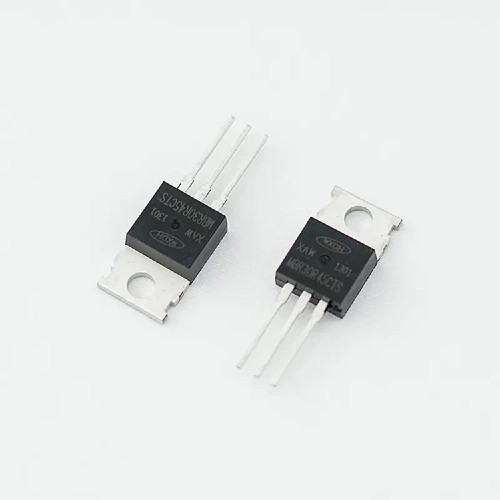
Comparison Table: The 4 MOSFET Types at a Glance
Type | Channel | Mode | Normal State (Vg = 0) | Turns ON When | Turns OFF When | Typical Applications |
N-Channel Enhancement | N-Type | Enhancement | OFF | Gate voltage > Vth | Gate = 0V | Power conversion, motor control |
P-Channel Enhancement | P-Type | Enhancement | OFF | Gate < 0V | Gate = 0V | Battery protection, portable devices |
N-Channel Depletion | N-Type | Depletion | ON | Gate = 0V | Gate < 0V | Current regulation, amplifiers |
P-Channel Depletion | P-Type | Depletion | ON | Gate = 0V | Gate > 0V | Signal circuits, analog biasing |
Enhancement vs. Depletion Mode: The Key Difference
Understanding Enhancement vs. Depletion is crucial to using MOSFETs effectively.
Feature | Enhancement MOSFET | Depletion MOSFET |
Channel at 0V Gate | Absent (Normally OFF) | Present (Normally ON) |
Gate Voltage Needed to Conduct | Positive for N-type, Negative for P-type | Reduces conduction |
Operation Principle | Channel created by gate voltage | Channel depleted by gate voltage |
Main Usage | Switching applications | Analog control, biasing circuits |
In short:
Enhancement MOSFETs are used for switching because they are naturally OFF and easy to control.
Depletion MOSFETs are used for analog regulation because they start ON and can modulate current smoothly.
N-Channel vs. P-Channel MOSFETs
The other key distinction lies between N-channel and P-channel devices.
Parameter | N-Channel | P-Channel |
Charge Carrier | Electrons | Holes |
Mobility | Higher | Lower |
On-Resistance (Rds(on)) | Lower | Higher |
Switching Speed | Faster | Slower |
Drive Voltage | Positive | Negative |
Typical Use | Low-side switch, power stage | High-side switch, control stage |
Most power circuits prefer N-channel MOSFETs for their superior electrical performance, while P-channel MOSFETs are used where design simplicity or polarity constraints matter.
How to Choose the Right MOSFET Type
Selecting the right MOSFET depends on your circuit’s voltage, current, frequency, and control logic.
Key Factors to Consider
Operating Voltage: Choose a MOSFET rated above your circuit voltage.
Current Rating: Ensure it can handle the expected load current.
Switching Speed: High-frequency applications require fast-switching MOSFETs.
Power Dissipation: Look for low Rds(on) values for efficiency.
Control Logic: Determine whether you need a normally ON or normally OFF device.
Example Recommendations
Power converters, EVs: N-Channel Enhancement MOSFET
Low-voltage switching: P-Channel Enhancement MOSFET
Analog biasing circuits: N-Channel Depletion MOSFET
Signal processing: P-Channel Depletion MOSFET
The Role of MOSFETs in Modern Technology
Today, MOSFETs are used in almost every area of electronics. Their ability to switch quickly, handle high power, and integrate into compact systems makes them indispensable.
1. Consumer Electronics
Used in chargers, laptops, and mobile devices for efficient power management.
2. Automotive Electronics
Control electric motors, manage battery systems, and regulate inverters in EVs and hybrid cars.
3. Renewable Energy
Critical in solar inverters, wind turbine control, and battery storage systems for power conversion.
4. Industrial Automation
Drive motors, manage sensors, and regulate voltage in smart factory equipment.
5. Communication Systems
Enable high-frequency signal amplification in 5G base stations, radios, and IoT devices.
Future Trends in MOSFET Development
As power efficiency becomes increasingly vital, traditional silicon MOSFETs are being enhanced by wide bandgap (WBG) materials, such as:
1. Silicon Carbide (SiC) MOSFETs
Withstand high voltage and temperature.
Offer faster switching and higher efficiency.
Used in EVs, solar inverters, and industrial drives.
2. Gallium Nitride (GaN) MOSFETs
Enable ultra-fast switching with minimal loss.
Perfect for high-frequency and compact power supplies.
Increasingly popular in wireless charging and telecom.
These next-generation MOSFETs represent the evolution of semiconductor design—smaller, faster, and more efficient.
Conclusion
The MOSFET is a vital semiconductor component powering nearly every modern innovation. The four main types—N-Channel Enhancement, P-Channel Enhancement, N-Channel Depletion, and P-Channel Depletion—each offer unique electrical characteristics tailored to specific circuit needs.
By understanding how these MOSFETs work and differ, engineers can design systems that are more efficient, reliable, and high-performing.
For companies and designers seeking high-quality, efficient, and advanced MOSFET solutions, Jiangsu Donghai Semiconductor Co., Ltd. provides a trusted source of expertise and innovation. With a strong commitment to performance and customer support, the company continues to deliver semiconductor products that drive progress in global electronics and sustainable energy.
FAQs
Q1: What are the four main types of MOSFETs?
A: N-Channel Enhancement, P-Channel Enhancement, N-Channel Depletion, and P-Channel Depletion MOSFETs.
Q2: Which MOSFET is most commonly used?
A: N-Channel Enhancement MOSFETs are the most popular due to their efficiency, low resistance, and high-speed performance.
Q3: What is the difference between enhancement and depletion MOSFETs?
A: Enhancement MOSFETs are normally OFF and require gate voltage to conduct, while depletion MOSFETs are normally ON and require gate voltage to stop conduction.
Q4: Are P-Channel MOSFETs less efficient than N-Channel?
A: Yes, because hole mobility is lower than electron mobility, P-channel MOSFETs generally have higher resistance and slower switching speeds.
Q5: What factors should be considered when selecting a MOSFET?
A: Consider voltage and current ratings, Rds(on), gate charge, switching frequency, and thermal performance.
Q6: What are SiC and GaN MOSFETs?
A: They are advanced MOSFETs made from wide bandgap materials (Silicon Carbide and Gallium Nitride), offering superior speed, temperature tolerance, and efficiency.